<?xml version="1.0" encoding="UTF-8"?>
<rss version="2.0"
	xmlns:content="http://purl.org/rss/1.0/modules/content/"
	xmlns:wfw="http://wellformedweb.org/CommentAPI/"
	xmlns:dc="http://purl.org/dc/elements/1.1/"
	xmlns:atom="http://www.w3.org/2005/Atom"
	xmlns:sy="http://purl.org/rss/1.0/modules/syndication/"
	xmlns:slash="http://purl.org/rss/1.0/modules/slash/"
	>

<channel>
	<title>Ayahuasca.com &#187; morgan brent</title>
	<atom:link href="http://www.ayahuasca.com/tag/morgan-brent/feed/" rel="self" type="application/rss+xml" />
	<link>http://www.ayahuasca.com</link>
	<description>Homepage of the Great Medicine</description>
	<lastBuildDate>Wed, 07 Jul 2010 18:19:07 +0000</lastBuildDate>
	<generator>http://wordpress.org/?v=2.9.2</generator>
	<language>en</language>
	<sy:updatePeriod>hourly</sy:updatePeriod>
	<sy:updateFrequency>1</sy:updateFrequency>
			<item>
		<title>Ayahuasca, Religion and Nature</title>
		<link>http://www.ayahuasca.com/ayahuasca-overviews/ayahuasca-religion-and-nature/</link>
		<comments>http://www.ayahuasca.com/ayahuasca-overviews/ayahuasca-religion-and-nature/#comments</comments>
		<pubDate>Thu, 27 Mar 2008 12:49:05 +0000</pubDate>
		<dc:creator>admin</dc:creator>
				<category><![CDATA[Mythos]]></category>
		<category><![CDATA[Overviews]]></category>
		<category><![CDATA[Shamanism]]></category>
		<category><![CDATA[Syncretic Religions]]></category>
		<category><![CDATA[deep ecology]]></category>
		<category><![CDATA[morgan brent]]></category>
		<category><![CDATA[santo daime]]></category>

		<guid isPermaLink="false">http://www.ayahuasca.com/?p=29</guid>
		<description><![CDATA[<strong>By Morgan Brent</strong>
In <em>ayahuasca</em>, dialogue is deepened to include all manner of elemental, plant, animal, ancestor, and deity. These then appear less as an "other," and more as participants in the metabolisms of yet larger bodies, such as regional          ecosystems, or the earth itself.]]></description>
			<content:encoded><![CDATA[<h3>By Morgan Brent</h3>
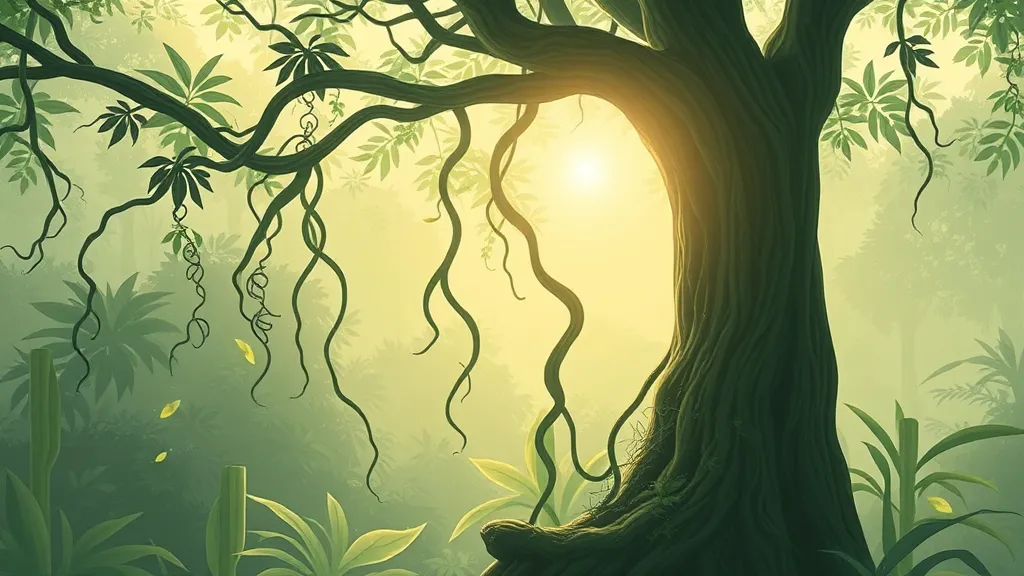
<p><span class="article"><em>Ayahuasca</em>, is a word from the <em>Quechua </em>linguistic family          of Andean-Equatorial South America. It means &#8220;vine of the soul&#8221; and refers          both to a large forest liana (<em>Banisteriopsis caapi</em>), and a strong          infusion (tea) made from its woody parts, or with one or more other plant          admixtures. The most usual addition to the brew are leaves from the shrub          <em>Psychotria viridis</em>. These plants are endemic to the Amazon Basin,          where they are part of a much larger <em>plantas maestras </em>or &#8220;teacher          plants&#8221; tradition native to that part of the world. Such plants &#8211; many          of which have emetic, purgative, cathartic, dream-inducing and/or visionary          effects – are used to facilitate states of consciousness that are believed          to open into the worlds of spirit.</p>
<p>In the typical <em>ayahuasca </em>preparation<em>, </em>the molecular basis          for this lies in the betacarboline complex (harmine, tetrahydroharmine,          etc.) and the indole dimethyltryptamine (DMT). These are part of a structural          group that includes neurotransmitters, molecules used to effect internal          communication in the human body. In <em>ayahuasca</em>, these dialogues          are deepened and expanded to include all manner of elemental, plant, animal,          ancestor, and deity. These then appear less as an &#8220;other,&#8221; and more as          participants in the metabolisms of yet larger bodies, such as regional          ecosystems, or the earth itself.</p>
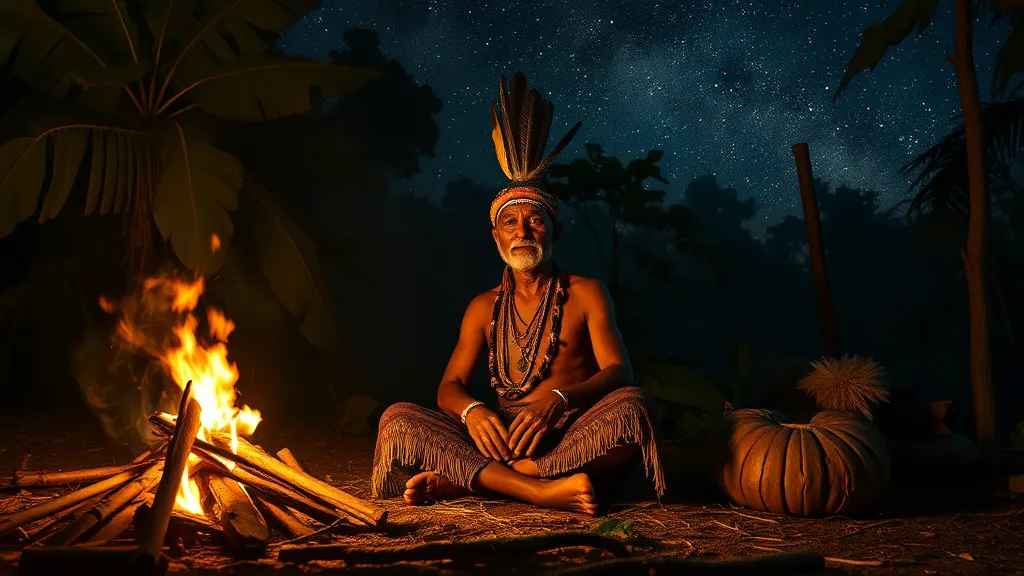
<p>Such organismic cosmologies are common to many indigenous peoples. These          often suggest the existence of a reality <em>a priori</em> to material existence,          one of mythic causality in which all beings are mutually transformative          and exist as ontological equals, as &#8220;persons&#8221;. Dialogues with such a world          are effected through imaginal exchanges (dreams and visions), dance, prayer,          song, and their attendant feeling states and sensory awareness. These          describe the body’s innate capacity to converse with what is presumed          to be the affective life of the natural world. <em>Ayahuasca </em>allows          access to this generous bandwidth of communication, and its repeated use          cultivates familiarity with the ecology of souls which inhabit it.</p>
<p>Sophisticated eco-cosmologies have therefore evolved among Amazonian          peoples around the use of <em>ayahuasca </em>and other <em>plantas maestras.          </em>These tend to order such practical activities as healing, divination,          procreation, and hunting within the concept of an all-encompassing fertility          circuit. This view understands the world to be nourished by a finite supply          of vital force that must be equitably shared. Human greed, waste, and          disrespect can easily disrupt this flow, and the repercussions are thought          to express themselves in personal and social ills. Spirituality and medicine          are thereby integrated into various social norms which tend to preserve          ecosystem integrity. Examples include food, sex, and hunting taboos, and          the cultivation of kinship relations with plants and animals.</p>
<p>The world of nature as revealed by <em>ayahuasca </em>typically appears          as a society, a culture of spiritual relations. The teachings of <em>ayahuasca</em>          are acts of healing, remediations in energy flow and balance whereby one          &#8220;becomes&#8221; the lessons. One so healed may then enter into transformative          relations with larger organizing forces, with greater ecosystemic intelligences,          which in turn tend to increase human self-consciousness, inspiration,          revelation, and sense of mission. When these traits are understood within          the context of spiritual evolution, <em>ayahuasca</em> takes on a religious          significance.</p>
<p><span class="article">The idea of healing body and soul has formed the essence of religious          beliefs of peoples the world over. Similarly, one can conjecture that          the supplication of humans to the healing power of nature is the source          of much of what we know as religious thought. In this regard, the role          of plants and fungi in the origins of religions has been explored by a          number of authors. Perhaps the most well-known example is <em>Soma, </em>the          mysterious plant (or fungus) recounted in the Hindu Rg-Vedas as a vehicle          of religious ecstasy.</p>
<p>Plant-inspired religions can be understood as acts of guidance by an          elder community of species to a younger one, the human. They are concerned          with successful co-creative relations within the community of nature and          the organismic and spiritual growth that these bring about. Such religions          allow the initiate to cultivate an expanded sense of self, whereby one’s          actions in the world are reviewed in experiences of right or wrong, heaven          or hell. This often results in a greater awareness of, and respect for,          the spiritual ecologies that govern the world.</p>
<p>These understandings have been lost to much of religious life as humanity          civilizes itself into increasingly mono-species (exclusively human) social          arrangements and dialogues. Politicizing, intellectualizing, and influences          that move divinity off-planet have all played their roles in denaturing          the religions that have co-evolved with Western industrialism.</p>
<p>However, a reformation of plant-inspired religions has been occurring          since the late 1800s. These often come of syncretizing influences in places          of sudden and disruptive culture change. Examples include the evolution          of the use of peyote (<em>Lophophora williamsii</em> ) into a pan-Native          American religion; and the creation of churches that employ iboga root          (<em>Tabernanthe iboga</em>) in colonized central west Africa. Similarly,          <em>ayahuasca-</em>based churches were born in the Amazon basin with the          influx of colonists and forest extractivists.</p>
<p><span class="article">In the late 1920s, a rubber tapper named Raimundo Irineu Serra, or Master          Irineu as he came to be called, had a series of visions in the forests          near Acre, Brazil brought on by his use of <em>ayahuasca. </em>In these          he was visited by the Queen of the Forest in the guise of the Virgin of          Conception. Through her he received the doctrine of a new religion based          on spiritual healing. <em>Ayahuasca </em>took on the name of <em>Daime</em>,          after the invocation <em>Dai-me Amor, Dai-me Luz. . . </em>(&#8220;Give me Love,          Give me Light&#8221;), and the religion became known as <em>Santo Daime. </em>Master          Irineu moved to the nearby town of Rio Branco in 1930, and there began          to cultivate this religion with a small group of adherents.</p>
<p>A number of hymns began to be received by church members in the form          of &#8220;singing murmurs,&#8221; considered to be gifted from higher worlds. They          invoke an eclectic pantheon that includes Old and New Testament figures          and various saints, spirits of sacred plants, forest animals, devic presences,          and heavenly bodies. These, along with accompanying musical instruments          and formalized dancing, became an important part of church ceremonies          and source for doctrinal development.</p>
<p>As the religion grew in Brazil, it spread from rural caboclo<em> </em>(mixed-blood          river dwellers) communities<em> </em>into new settings and populations.          These include the urban middle class, health professionals, and intelligentsia,          as well as more marginalized groups, such as drug addicts (the churches          have become well known for their work in helping people to overcome addictions),          counter-culturalists, and the urban poor. This growth stimulated the formation          of sects. For example, the Barquinha (&#8220;little boat&#8221;) group emerged in          the 1950’s; it accommodates aspects of the very heterogeneous Umbanda          (mediumist) spiritualism.</p>
<p>Yet another rubber tapper, Jose Gabriel da Costa, encountered the use          of <em>ayahuasca</em> with native Indians in the forests bordering Bolivia          and Brazil. In 1961 he founded the U.D.V. (<em>União do Vegetal</em>) which          soon spread into the urban south of Brazil. Among the more hierarchical          and organizationally sophisticated of the <em>ayahuasca </em>religions,          the U.D.V. stresses a less &#8220;active&#8221; service, with long periods of silence          interspersed with conversational sharing.</p>
<p>Despite differences, all churches share similarities that derive from          the integrative nature of <em>ayahuasca</em> itself. It is considered a          sacrament, and like its predecessor <em>soma, </em>a divinity, both &#8220;Christ’s          blood,&#8221; and a forest spirit. The replacement of the bread and wine Eucharist          with <em>ayahuasca </em>brings an eco-spiritual force into communion with          Christian saints and their prescriptions of love, peace, charity, and          fraternity. By unifying the naturalized and the civilized, it appears          to work as a bridge over the 500 years of culture clashes wrought by the          colonialist enterprise. In this way it births new cultural forms of indigeneity,          ways of belonging to the land that reflect the needs of the various peoples          brought to it.</p>
<p>A notable example is the 1982 founding of a community called <em>Vila          Céu do Mapiá </em>(Mapia) by <em>Santo Daime </em>church members. Located          in a large forest reserve in the Brazilian state of Amazonas, Mapia is          intended as an ecological-communal &#8220;social laboratory&#8221; where the teachings          received through the <em>Daime </em>can be practiced in daily life.</p>
<p>The world affirmed by <em>ayahuasca, </em>and in fact all teacher plants,          tends to run contrary to that enacted by industrial-growth cultures. Hence          those individuals that convert often become less amenable to mainstream          mores, values, and ways of life. The media in Brazil and elsewhere have          observed this, and in recent years have accused the churches of contributing          to the breakdown of society; this by inducing its followers into acts          of fanaticism, such as leaving one’s city life and disappearing into the          forest.</p>
<p>Antipathy to the forces of change unleashed by sacred plants is likewise          reflected in the modern War on Drugs. Under international pressure, Brazil          added <em>B. caapi</em> to its list of controlled substances in 1985. Following          a series of appeals and investigations it was removed from the list with          provisions in 1987, and fully exempted in 1992. In that year its legitimacy          was celebrated with <em>ayahuasca </em>ceremonies featured as part of the          inter-religious vigil of the Global Forum section of the Earth Summit          conference in Rio de Janeiro.</p>
<p>As the use of <em>ayahuasca </em>spreads outside of Brazil, it continues          to run into prohibition policies. In recent years the churches in Europe          and the U.S. experienced a number of seizures and arrests. Many court          cases are pending, though a decision on May 21, 2001 in the Dutch court          acquitted the <em>Santo Daime </em>church under the constitutional right          to freedom of religion.</p>
<p>Modern <em>ayahuasca </em>religions are born both of the sylvan cosmos          and a humanity sundered from that world. They therefore have great implications          during this era of ecological crisis. To reestablish communicative relations          with medicinal plants is to reconnect with a perennial source of assistance          to humans. What such plants can do for individuals, they can do for communities;          in this way they engender healing cultures. This process continues in          Brazil (e.g., the <em>Centro de Cultura Cósmica</em> has recently sprouted          from both <em>Santo Daime</em> and the <em>U.D.V. </em>influences) and in          other areas of the world, where such movements are more covert.</p>
<p>These religions are prophetic in considering themselves microcosmic realities          of a future-healed earth, yet for them, the future is now. They presume          that as more people awaken to this reality, a relational indigeneity appropriate          for the times will become increasingly accepted as a new cultural norm,          and the planetary crisis will then pass. This vision is millenarian in          scope, and suggests the inevitable evolution of a heart-opening ecotopia.          To this end, a <em>Daime </em>hymn sings of a &#8220;new life, new world, new          people, new earth.&#8221;</p>
<p><strong>Bibliography</strong></p>
<p>Descola, Phillipe</p>
<p>1994 <em>In the Society of Nature</em>. New York: Cambridge University          Press.</p>
<p>Forte, Robert, ed.</p>
<p>1997 <em>Entheogens and the Future of Religions</em>. San Francisco: Council          on Spiritual Practices.</p>
<p>Grob Charles, et al</p>
<p>1996 Human Psychopharmacology of <em>Hoasca</em>, A Plant Hallucinogen          Used in Ritual Context in Brazil (including commentary by Marlene Dobkin          Del Rios). <em>Journal of Nervous and Mental Disease</em>. 184(2):86-98.</p>
<p>Groisman, A., and A.B. Sell</p>
<p>1996 &#8220;Healing Power&#8221;: Cultural-Neurophenomenological Therapy of <em>Santo          Daime. </em>(In) <em>Yearbook of Cross-Cultural Medicine and Psychotherapy          1995</em>. Michael Windelman &amp; Walter Andritzky, eds. VWM &#8211; Verlag fur          Wissenschaft und Bildung.</p>
<p>McKenna, Terence</p>
<p>1991 <em>The Archaic Revival</em>. San Francisco: Harper.</p>
<p>Metzner, Ralph</p>
<p>1999 <em>Green Psychology: transforming our relationship to earth</em>.          Rochester, VT: Inner Traditions Press.</p>
<p>Polari, Alex</p>
<p>1996 <em>Might the Gods be Alkaloids?</em> Paper presented at International          Transpersonal Association’s Annual Conference &#8220;The Technologies of the          Sacred.&#8221; Manaus, Brazil</p>
<p>Reichel-Dolmatoff, G.</p>
<p>1976 Cosmology as Ecological Analysis: a view from the rain forest (Huxley          Memorial Lecture 1975). <em>Man</em>. 11:307-318.</p>
<p>Ruck, Carl, R. Gordon Wasson, Stella Kramrisch, Jonathan Ott</p>
<p>1992 <em>Persephone’s Quest</em>. Yale University Press: New Haven, CT.</p>
<p></span></p>
<p></span></p>
<p></span></p>
]]></content:encoded>
			<wfw:commentRss>http://www.ayahuasca.com/ayahuasca-overviews/ayahuasca-religion-and-nature/feed/</wfw:commentRss>
		<slash:comments>1</slash:comments>
		</item>
	</channel>
</rss>