
By Doctorcito
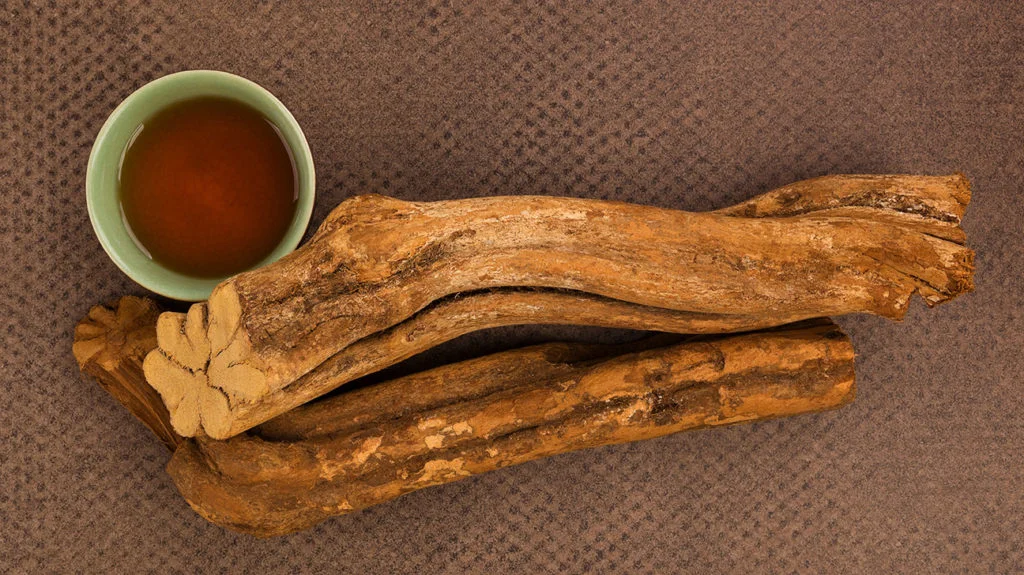
More and more people are using or consider using ayahuasca or caapi tea as an alternative medicine for different therapeutic purposes: depression, Parkinson’s disease, ageing-related cognitive decline, etc.
Yet most of these actual or planned uses are relying on the rich pharmacodynamics of the caapi vine and don’t necessitate the preparation and use of a standard mix. Rather what is needed is a caapi tea specifically designed for these purposes.
During a fieldwork in Peruvian Upper Amazon, Partner and I have had the opportunity to learn the preparation and effects of a caapi-alone brew that appeared a well suited prototype for such a therapeutic tea.
I managed to reproduce it with ressources commonly available in a First World country (including the Preparation forum of this board). The following method gives a tea both of us found equivalent under all aspects to the original.
Material: 300 g of roughly pounded dried stems of Banisteriopsis caapi var. cielo purchased from Maya Ethnobotanicals were put in a 10 l chemicals-proof plastic bucket containing 6 l distilled/demineralized water to which 60 ml of organic apple cider vinegar were added. Proportions are thus 1:20 for dried plant material:water, 1:100 for vinegar:water.
Method: after having left soaking overnight, the whole stuff was poured out for cooking in two 3.5 l ceramic pots. After slow boiling during 4 h and infrequent stirring with a wooden spoon, preparation was poured back in the (rinsed) bucket, and the pots rinsed. Then, using a large cooking-glass jar (handled with heat-resistant gloves) and a permanent coffee filter put in a funnel, the liquid was separated from the plant material, filtered, and poured again in the ceramic pots.
Duration of the very slow boiling reduction step depends on the desired final volume/concentration. Here, to obtain the equivalent of the original tea, the final volume was set to 1.5 l, i.e. 1/4 of the initial volume of water. It took about 3 h, under constant supervision.
Once cooled, the liquid was filtered twice, in adding a paper coffee filter (bamboo paper for rapid filtering) to the permanent one: a first filtration in the glass jar (previously rinsed) and a second during final transfer into three 0.5 l plastic bottles (previously rinsed). Extra attention was devoted to fill up the bottles so that no air remained under the hermetic top. The rinsing (triple = lab standard) of all ustensils and containers (all reserved for this use) was effectuated with distilled water. Sanitized (bleach) rubber gloves were used for all manipulations implying immediate or delayed contact with the brew (especially during the final filtering and transfer step).
With these precautions, conservation at ambient temperature in the dark proved to be effective up to 6 months.
Depending on individual metabolism and purpose, such a caapi tea may be pharmacologically active with doses as low as 20 ml. It allows a convenient precise adjustment of the therapeutic dose and is a useful basis/prototype to evaluate the optimal concentration (reduction step duration) one wishes to obtain according to the preferred volume of intake (it smells and tastes better than concentrated standard mix).
N.B. Ideally this post should be in the Preparation forum. I just found more convenient to post it in the Science forum because I can pin it there, allowing thus easier access and reference to it.
Disclaimer:
The content on this page has been preserved from previous versions of Ayahuasca.com for informational and educational purposes only. It is not intended as medical advice and should not replace consultation with a qualified healthcare professional. Ayahuasca is sacred plant medicine, not suitable for everyone, and participation requires careful consideration.
For additional information and updated content, explore our curated collection of Resources.